Education Evaluation Commission Releases 2026 School Performance Cards
The Education and Training Evaluation Commission has released the 2026 Educational Performance Cards for schools, based on NAFS assessment results involving more than 1.3 million students, providing indicators to track school performance and identify strengths and areas for improvement.
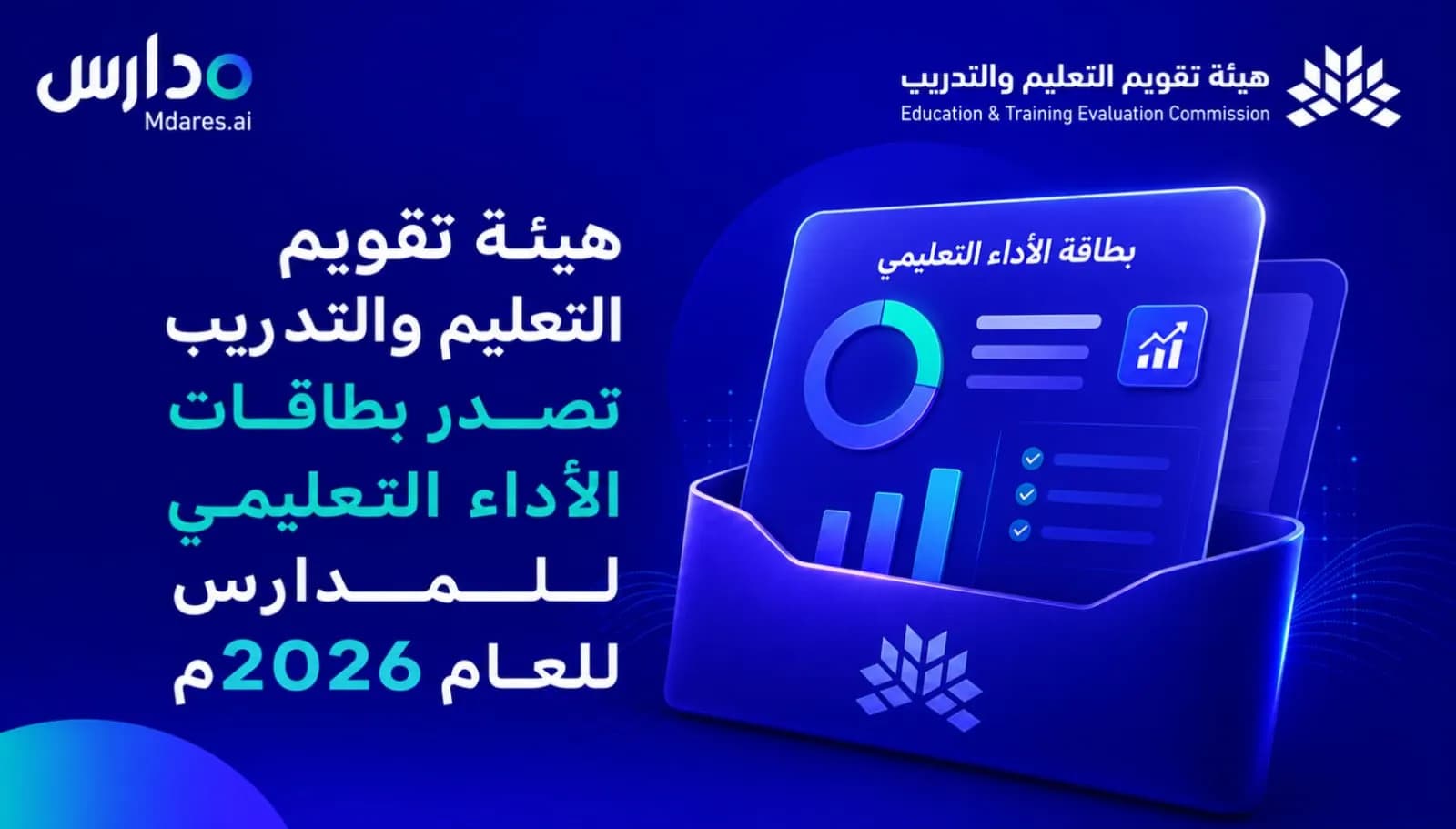
The Education and Training Evaluation Commission (ETEC) has issued the 2026 Educational Performance Cards for all public, private, and international schools across the primary and middle school stages in Saudi Arabia, marking the fifth consecutive year of issuing these cards, alongside the start of the new academic year 1448–1449 AH.
The 2026 Educational Performance Cards are based on the results of the 2026 National Assessment (NAFS), conducted by the Education and Training Evaluation Commission in cooperation with the Ministry of Education, with the participation of more than 1.3 million students.
The performance cards provide indicators and data that help assess schools' educational performance, track changes in their results, and identify strengths and areas for improvement.
What Are the Educational Performance Cards for Schools?
Educational Performance Cards are one of the tools used by the Education and Training Evaluation Commission to present indicators related to schools' educational performance and students' achievement levels.
The cards provide more detailed results that go beyond the national level to include education administrations and individual schools.
These indicators help educational authorities and schools understand educational performance and monitor changes in results from one year to another, supporting continuous improvement and development.
The release of the Educational Performance Cards for the fifth consecutive year is part of an ongoing system for measuring education quality and monitoring learning outcomes across Saudi schools.
What Is the Relationship Between the Educational Performance Cards and NAFS 2026 Results?
The 2026 Educational Performance Cards are based on the results of the NAFS national assessments. These assessments aim to measure students' educational achievement in a range of essential skills and academic areas.
The 2026 NAFS assessments were conducted from April 5 to April 23, 2026, in cooperation between the Education and Training Evaluation Commission and the Ministry of Education.
The assessments covered several grade levels, including:
Third grade of primary school: Mathematics and Reading.
Sixth grade of primary school: Mathematics, Reading, and Science.
Third grade of middle school: Mathematics, Reading, and Science.
More than 1.3 million students participated in the assessments.
The results of the national assessments are used within the educational performance measurement system to provide indicators that can help monitor students' achievement levels and track changes in performance over time.
What Does a School Performance Card Show?
A School Performance Card provides a range of indicators related to educational performance, allowing users to gain a more detailed understanding of a school's performance.
The card is not limited to presenting a single result. Instead, it is part of a broader system of data and indicators that can be used to monitor school performance and changes over time.
Making data available at both the school and education administration levels also makes it possible to move beyond general national results and gain a more specific understanding of educational performance.
This makes the Educational Performance Cards an important tool for schools and education administrations when identifying strengths and areas that require further improvement.
Where Can Schools Access the Educational Performance Cards?
The Education and Training Evaluation Commission has made the Educational Performance Cards available to schools and education administrations through the Tameez digital platform.
Detailed results and indicators are also available through dedicated sections of the Education and Training Situation Room, which provides various data and analytical dashboards related to education and training in Saudi Arabia.
The Education and Training Situation Room includes more than 250 data dashboards, providing a wide range of indicators and analyses that can be used to monitor the performance of the education and training system.
Why Did the Education and Training Evaluation Commission Issue the Performance Cards?
The Educational Performance Cards aim to support the diagnosis of educational performance and provide information that helps schools and education administrations identify strengths and areas for improvement.
The data also allows changes in performance to be monitored over the years, helping stakeholders assess improvements or declines in educational indicators.
This initiative is part of Saudi Arabia's broader efforts to develop its education quality measurement system and use educational data and assessment results to improve learning outcomes.
Do the Educational Performance Cards Rank Schools in Saudi Arabia?
The Educational Performance Cards should not be viewed as an official ranking of schools from best to lowest performing.
The primary purpose of these indicators is to assess performance, track changes, and identify strengths and areas for improvement.
Therefore, the performance indicators of a particular school do not necessarily mean that it is the "best school" overall. Choosing the right school depends on several factors, and students and families have different educational needs.
For this reason, school performance indicators are best considered one source of information that parents can use when evaluating schools.
How Can Parents Benefit From School Performance Information?
Providing clearer information about school performance can help parents when searching for a new school for their children.
When comparing schools, parents can consider performance indicators alongside other factors, including:
School location and proximity to home.
Educational stage offered.
Curriculum type.
Tuition fees.
Educational programs and activities.
Available facilities and services.
The student's educational needs.
The school environment.
This approach ensures that the final decision is not based on a single indicator but on a more complete picture of the school.
How Can NAFS Results Help Parents Understand School Performance?
NAFS results provide indicators related to students' achievement in the skills and academic areas assessed through the national examinations.
When these results are considered as part of the Educational Performance Card system, they can help provide a clearer picture of educational performance and how it changes over time.
The importance of these data lies in the fact that they are based on official assessment and evaluation processes, rather than relying solely on personal opinions or unofficial information when evaluating a school.
Why Are the Performance Cards Important for Primary and Middle Schools?
The 2026 Educational Performance Cards cover schools across the primary and middle school stages, including public, private, and international schools.
The available data can therefore help provide a clearer picture of the performance of schools covered by the system, while allowing indicators to be monitored at both school and education administration levels.
The continued release of the Educational Performance Cards for the fifth consecutive year also reflects an ongoing focus on using educational data to monitor performance quality and identify opportunities for improvement.
What Do the Performance Card Results Mean for the 1448–1449 AH Academic Year?
The release of the Educational Performance Cards coincides with the beginning of the new academic year, making school performance data particularly relevant to schools, education administrations, and parents.
At the beginning of a new academic year, many parents also start searching for suitable schools for their children, whether because of moving to a new area, transitioning to a different educational stage, or considering a different school.
In this context, school performance indicators can serve as one of the tools parents use to gather information before making an enrollment decision.
How Can You Choose the Right School for Your Child?
Choosing the right school should not depend solely on assessment results or performance indicators.
A school that is suitable for one student may not necessarily be the best option for another. Parents should therefore consider several factors and compare them with their family's and child's needs.
When searching for a school, it can be useful to compare:
Location → Educational Stage → Curriculum → Tuition Fees → Services → School Environment → Performance Indicators
Parents can also use school discovery platforms to access more organized information about available options in the areas they are considering.
Through Mdares.ai, parents can explore schools across different regions and cities in Saudi Arabia and find available information about each school, helping them during the search and comparison process.
Will the Educational Performance Cards Change in Future Years?
The release of the Educational Performance Cards for the fifth consecutive year means that school performance data can be monitored over time.
This allows current results to be considered alongside previous results to understand changes in performance, rather than looking at the results of a single year in isolation.
As the national assessment and evaluation system continues to develop, monitoring performance indicators over multiple years becomes increasingly valuable for educational authorities, schools, and parents interested in understanding educational performance.
Conclusion
The 2026 Educational Performance Cards for Schools are one of the tools provided by the Education and Training Evaluation Commission to monitor and assess educational performance across Saudi schools.
The 2026 cards are based on the results of the NAFS 2026 assessments, which involved more than 1.3 million students. The data and indicators are available at multiple levels, including the national level, education administrations, and individual schools.
For parents, school performance information can be used as part of the research and comparison process. However, other factors such as location, curriculum, educational stage, tuition fees, and available services should also be considered before choosing a school.
With the beginning of the 1448–1449 AH academic year, these data provide families in Saudi Arabia with an additional source of information that can support more informed decisions when searching for the right school for their children.
FAQ About the 2026 Educational Performance Cards
What are the 2026 Educational Performance Cards for schools?
They are cards that provide indicators and data about school performance, helping assess educational performance and identify strengths and areas for improvement.
What is the relationship between School Performance Cards and NAFS 2026?
The 2026 Educational Performance Cards are based on the results of the NAFS 2026 national assessments, which involved more than 1.3 million students.
How can I access a school's Performance Card?
Schools and education administrations can access the Performance Cards through the Tameez platform, with additional detailed indicators available through the Education and Training Situation Room.
Do School Performance Cards rank schools?
No. The Performance Cards do not necessarily represent an official ranking of schools. Instead, they provide indicators used to assess performance, track changes, and identify areas for improvement.
Do NAFS results determine the best school in Saudi Arabia?
No. NAFS results and school performance indicators are only some of the factors that can be considered when evaluating a school. They do not, by themselves, determine which school is best for every student.
Which grades were included in the NAFS 2026 assessments?
The assessments included third grade of primary school, sixth grade of primary school, and third grade of middle school, covering Reading, Mathematics, and Science depending on the grade.
Do the Performance Cards include private and international schools?
Yes. The announcement states that the Performance Cards were issued for public, private, and international schools across the primary and middle school stages.
How can parents benefit from school performance information?
Parents can use school performance indicators as one factor when comparing schools, alongside location, curriculum, tuition fees, educational stage, and available services.
Where can I find information about school performance in Saudi Arabia?
School performance data and indicators are available through platforms and channels operated by the Education and Training Evaluation Commission, including the Tameez platform and the Education and Training Situation Room.
Can I compare schools before choosing one for my child?
Yes. It is better to compare several factors rather than relying on a single indicator, including educational performance, location, curriculum, tuition fees, and available services.